Power washer safety tips are essential for any homeowner thinking about cleaning siding, driveways, patios, decks or walkways on their own. Power washing can absolutely improve the look of your home, but it can also create expensive damage if it is done incorrectly.
A lot of people assume power washing is simple. Point, spray and watch the dirt disappear. But the reality is different. The wrong pressure setting, the wrong nozzle, poor spray angle or using too much force in one spot can damage surfaces much faster than most homeowners expect.
In Southern Maryland, where homes deal with pollen, algae, humidity, dirt buildup and seasonal weather stress, exterior cleaning matters. But doing it the wrong way can leave you with cracked siding, splintered wood, etched concrete or water pushed behind materials where it does not belong.
That is why understanding basic power washer safety tips is just as important as understanding what to clean. In this guide, we’ll walk through the most common DIY power washing mistakes homeowners make, explain why they happen and show you how to avoid them.
Why Power Washer Safety Tips Matter More Than Most Homeowners Realize
Power washing is effective because it uses force. That force is exactly what makes it risky.
Used correctly, power washing can remove grime, algae, mildew and surface stains. Used incorrectly, it can strip paint, gouge wood, force water behind siding and shorten the life of exterior materials.
That is why power washer safety tips are not just about protecting yourself. They are also about protecting your home.
As one recent article on power washing mistakes explains, homeowners often underestimate how easily the wrong pressure, poor technique or skipped prep work can lead to surface damage. That is especially true when people rush into the project without understanding what each surface can handle.
Good exterior cleaning is not about blasting everything with maximum power. It is about control, patience and using the right approach for the right material.
Using Too Much Pressure Is One of the Biggest DIY Mistakes
One of the most common mistakes homeowners make is assuming higher pressure means better cleaning.
It makes sense at first. If some pressure cleans dirt, then more pressure should clean faster. But in reality, excessive pressure is one of the quickest ways to damage your property.
Too much force can:
- Crack vinyl siding
- Splinter wood
- Strip paint
- Etch concrete
- Damage mortar joints
- Remove protective finishes
Hard surfaces like concrete can usually handle more pressure than wood or siding, but even concrete can be damaged if the nozzle is too concentrated or held too close.
This is why power washer safety tips always start with using the lowest effective pressure first. It is much safer to begin low and test than to start aggressive and regret it later.
Not Every Surface Should Be Treated the Same Way
Another major DIY mistake is assuming one setting works for every area of the house.
Your driveway, deck, siding, pavers, steps and patio all respond differently to pressure and water flow. The cleaning method should change depending on the surface.
For example:
- Wood is more delicate and can be gouged easily
- Vinyl siding can crack or allow water intrusion
- Pavers may lose joint sand if washed too aggressively
- Painted surfaces may peel if pressure is too high
Following smart power washer safety tips means recognizing that each material has its own limits. A careful approach gives you a much better result than using one setting for everything.
Spraying Too Close Can Cause Instant Damage
Distance matters more than many homeowners realize.
Even if you are using the correct pressure, holding the nozzle too close can concentrate force and damage the surface almost instantly. This is one of the biggest reasons beginners accidentally leave marks or strip finishes.
A safe habit is to:
- Start from farther back
- Test a small hidden area first
- Move closer only if needed
- Keep the wand moving consistently
Good power washer safety tips are not just about the machine setting. They are also about how you use the wand in real time. Small adjustments in distance can make a huge difference.
Ignoring Spray Angle Can Force Water Where It Should Not Go
Homeowners often focus on pressure but forget about angle. That is where problems like water intrusion begin.
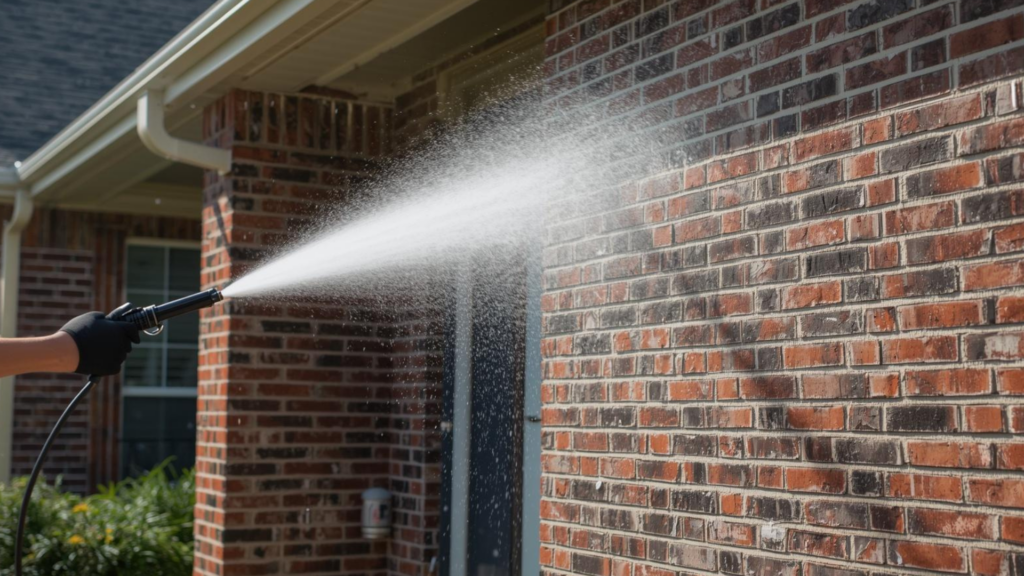
If you spray upward under siding panels, under shingles or directly at window and door seals, you can push water into places it should never reach. That moisture can lead to mold, interior damage or long-term deterioration.
This is one of the most important power washer safety tips for siding and trim. Always be careful about the direction of the spray. The goal is to clean the exterior surface, not force water behind it.
That is also why some areas are better handled with a gentler cleaning method rather than aggressive DIY pressure washing.
Skipping Pre-Treatment Makes the Job Harder and Riskier
A lot of homeowners go straight to spraying without pre-treating stains, mildew or algae. That usually leads to two problems.
First, the results are uneven. Second, they end up making multiple aggressive passes to compensate.
That extra force increases the chance of damage.
In many cases, pre-treatment does the heavy lifting. It loosens buildup so the washing process can be gentler and more controlled. This is one of the most overlooked power washer safety tips because people often think water pressure alone should do everything.
In reality, the smartest cleaning jobs combine:
- The right prep
- The right pressure
- The right nozzle
- The right pace
That is how you get cleaner surfaces without unnecessary risk.
Using the Wrong Nozzle Is a Common DIY Problem
Not all nozzles are interchangeable.
A narrow spray pattern creates concentrated force. A wider fan spray spreads the pressure out and is generally safer for broad cleaning. Homeowners who use a very narrow nozzle without understanding its intensity often damage surfaces much faster than expected.
This is where practical power washer safety tips make a real difference. The wrong nozzle can turn a simple cleaning project into a repair project.
If you are not sure which nozzle to use, the safest starting point is usually a wider spray angle and a test section in a low-visibility area. That gives you control and reduces the chance of making an expensive mistake.
Power Washing Can Be Dangerous If You Ignore Basic Safety
DIY power washing does not just put your surfaces at risk. It can also put you at risk.
The force coming out of a power washer is strong enough to cause injury. It is also easy to lose balance when dealing with hose tension, wet surfaces and machine kickback.
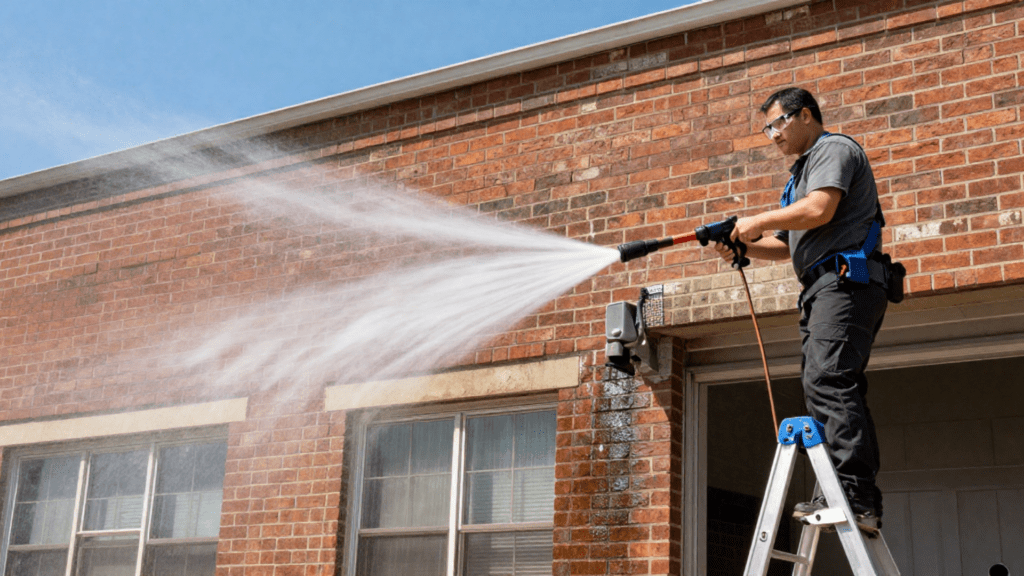
Basic power washer safety tips should always include:
- Wearing closed-toe shoes with grip
- Using eye protection
- Keeping children and pets away from the work area
- Avoiding ladders whenever possible
- Never spraying electrical fixtures or outlets directly
If you are working around steps, slopes or slick surfaces, safety becomes even more important. Exterior cleaning is not worth an injury.
Weather and Timing Affect Results More Than People Think
A lot of homeowners choose a sunny afternoon for power washing because it feels like the obvious time to clean. But weather matters.
If it is too hot, detergents and water may dry too quickly and leave streaks. If it is windy, overspray becomes harder to control. If the weather is cold, drying times change and surfaces may stay slick longer.
Part of following smart power washer safety tips is choosing the right conditions. Mild weather with controlled drying conditions often gives better results and makes the work safer.
Timing also matters from a maintenance perspective. If your home has heavy pollen buildup, green algae or winter grime, dealing with it earlier can help prevent more aggressive buildup later.
Some Areas of the Home Should Be Handled with Extra Caution
Not every exterior feature is a good candidate for aggressive DIY power washing.
Areas that often need special care include:
- Older painted surfaces
- Delicate trim
- Wood decks
- Aging brick or mortar
- Roof shingles
- Window seals
This is where power washer safety tips become more about judgment. Just because a power washer can reach a surface does not mean that surface should be cleaned that way.
Homeowners often do their best damage when they assume every exterior material is tough enough to handle the same process.
The Biggest Problem Is Thinking Power Washing Is Easy
This may be the most important point in the whole article.
Power washing looks easy from a distance. That is exactly why so many homeowners underestimate it. They see dramatic before-and-after videos online and assume the process is simple. But good results depend on knowledge, control and surface awareness.
That is why power washer safety tips matter so much. They are what separate a successful cleanup from a costly mistake.
If your goal is to protect your siding, keep your deck in good shape and make your home look cleaner without creating new problems, caution matters more than speed.
When It Makes More Sense to Hire a Professional
There is nothing wrong with wanting to handle maintenance yourself. But there are situations where DIY stops being worth the risk.
You should think twice about doing it yourself if:
- You are unsure what pressure a surface can handle
- You are cleaning delicate wood or older siding
- You need to work at height
- You are dealing with stubborn algae, mildew or stains
- You do not have the right equipment or nozzles
Professional exterior cleaning is not just about stronger equipment. It is about experience. A trained team knows how to adjust technique based on the surface, the buildup and the risks involved.
That difference matters when the goal is a cleaner home without hidden damage.
Clean Smarter, Not Harder
Power washing can absolutely improve the look of your property, but only when it is done with care. The biggest DIY mistakes usually come from the same assumption: that more pressure, more speed and less prep will get better results. In reality, the opposite is usually true.
The best power washer safety tips come down to control, patience and understanding the surface you are cleaning. When you start with the right approach, you reduce the chance of damaging your home and increase the chance of getting results that actually last.
Scott Landscaping Services helps homeowners in Southern Maryland keep their properties looking clean, safe and well maintained.
If you want a better exterior clean without the risks of DIY damage, contact us today to request a quote and get professional help for your property.